Quick answer
Pick a window seat away from galleys and toilets, time your sleep to your destination’s night, and pack an eye mask, earplugs or noise-canceling headphones, a neck support and a warm layer. Limit caffeine and alcohol before and during the flight, recline only when it’s appropriate, and buckle your seatbelt over your blanket so crew don’t need to wake you.
Few people sleep well in an economy seat, but small choices add up. Here’s what makes the most difference, roughly in order of impact.
Before you fly
Choose your seat carefully
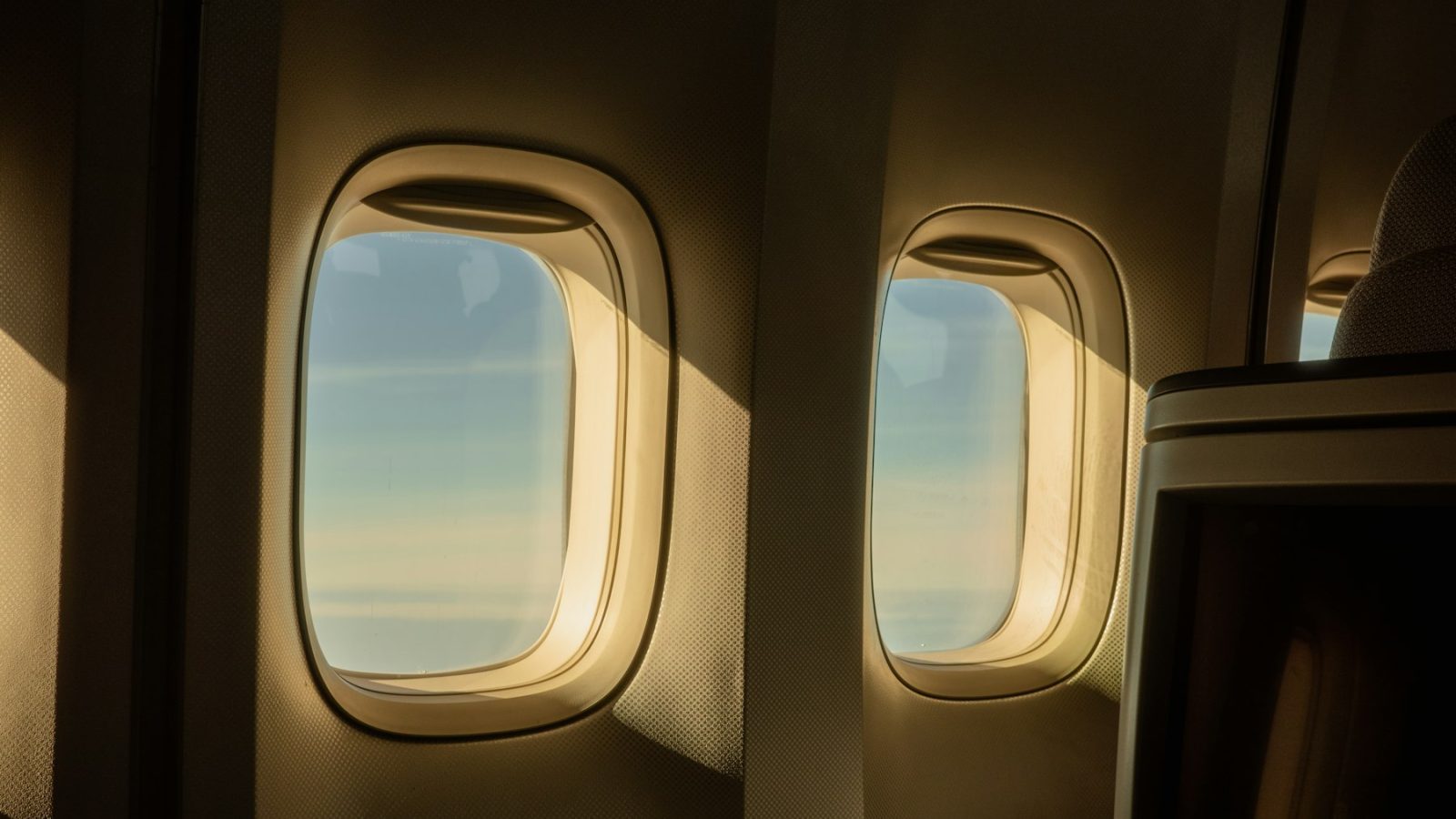
- Window seats give you something to lean against and nobody climbing over you.
- Avoid galleys and toilets, where light, noise and foot traffic continue all night.
- Be careful with the last row on some aircraft, which may have limited recline.
- Bulkhead rows offer legroom but often have armrests that don’t lift and can be near bassinets.
Shift your schedule a little
If you’re crossing several time zones, moving your bedtime an hour or so toward the destination’s schedule in the days before you leave can help. On the flight, try to sleep when it’s night at your destination.
Book a flight that suits sleep
Overnight departures often line up better with your natural sleep window than daytime flights.
What to pack
- Eye mask that blocks light fully
- Earplugs or noise-canceling headphones
- Neck support that suits how you sleep (some people prefer a scarf or a rolled jacket)
- A warm layer and socks: cabins often get cold
- Water bottle (empty through security, then refill)
- Lip balm and moisturizer for dry cabin air
- Any medication in your carry-on
On the plane
- Get comfortable early. Set up your mask, headphones and layers before the meal service ends.
- Fasten your seatbelt over your blanket so crew can see it during turbulence checks without waking you.
- Limit caffeine and alcohol. Both can make sleep lighter and more broken.
- Hydrate, but balance it against trips to the toilet.
- Recline considerately, ideally after meal service, and check behind you first.
- Move around when you’re awake: walk the aisle and stretch your calves.
About sleep aids
Talk to a doctor or pharmacist before using any sleep medication or supplement on a flight, especially if you haven’t used it before. Some can leave you groggy on arrival or interact with other medicines.
After you land
Get daylight and stay active until a reasonable local bedtime. A short nap is fine if you’re exhausted, but keep it brief so you can sleep at night.
Planning a long-haul trip? Our international travel checklist covers documents and essentials, and how to pack a carry-on helps you keep what you need within reach.
Travel rules, prices and product details change. Check official government, airline and manufacturer sources before you book or buy.