Quick answer
Pack for about five to seven days regardless of trip length and plan to do laundry. Build outfits around two or three base colors, wear your bulkiest shoes and jacket on travel day, roll or fold clothes into packing cubes, put heavy items at the wheel or bottom end, and keep liquids, electronics and documents where you can reach them at security.
Key takeaways
- Check your airline’s carry-on size and weight limits first. They vary by airline and fare.
- Pack outfits, not individual items: every top should work with every bottom.
- Shoes take the most space. Bring two pairs at most, and wear the bigger pair.
- Packing cubes don’t create space, but they make a tightly packed bag easy to live out of.
Traveling with only a carry-on saves checked-bag fees and time at the airport, and removes the risk of lost luggage. The trick isn’t a magic folding technique. It’s deciding what to bring before you start packing. Here’s the method, step by step.
Step 1: Know your limits
Many US airlines cap carry-on bags at 22 x 14 x 9 inches including wheels and handles, and some airlines (particularly outside the US and on low-cost carriers) add weight limits or charge for anything beyond a small personal item. Check your specific airline and fare before you pack. If you’re choosing a bag, our carry-on luggage buying guide lists maker-stated dimensions so you can compare.
Carry-on and personal item limits by airline
Sizes as published on each airline’s official baggage page (checked November 2026). Limits include wheels and handles. Fares and rules change, so check your booking.
| Airline | Carry-on | Personal item | Watch out for |
|---|---|---|---|
| American | 22 x 14 x 9 in | 18 x 14 x 8 in | Basic Economy boards last, so bins may be full |
| Delta | 22 x 14 x 9 in (or 45 linear in) | Must fit under the seat | Small regional jets may allow a personal item only |
| United | 22 x 14 x 9 in | 17 x 10 x 9 in | Basic Economy is personal item only on most routes |
| Southwest | 24 x 16 x 10 in | 18.5 x 13.5 x 8.5 in | Checked bags are no longer free on most fares (since May 2025) |
| Alaska | 22 x 14 x 9 in | Must fit under the seat | |
| JetBlue | 22 x 14 x 9 in | 17 x 13 x 8 in | Blue Basic has included a carry-on since September 2024 |
| Air Canada | 55 x 40 x 23 cm | 43 x 33 x 16 cm | Economy Basic: personal item only on many North American routes |
| Lufthansa | 55 x 40 x 23 cm, 8 kg | 40 x 30 x 15 cm | Weight limit applies |
| British Airways | 56 x 45 x 25 cm | 40 x 30 x 15 cm | |
| Emirates (Economy) | 55 x 38 x 22 cm, 7 kg | — | Weight limit applies |
| Ryanair | Paid (55 x 40 x 20 cm, 10 kg) | Free: 40 x 30 x 20 cm | Gate fees for oversized bags |
| easyJet | Paid (56 x 45 x 25 cm, 15 kg) | Free: 45 x 36 x 20 cm | Large cabin bag fee at the gate |
Swipe the table sideways to see all columns.
New EU rule: free personal item from October 2027
Under Regulation (EU) 2026/2202, airlines covered by EU passenger rights must carry a personal item up to 40 x 30 x 15 cm at no extra cost from October 23, 2027. Despite earlier reports, the final law does not guarantee a free 7 kg cabin bag: larger hand baggage still depends on your fare.
Step 2: Plan a capsule wardrobe
Choose two or three base colors that all work together, then add one accent. This means every top works with every bottom, so a handful of pieces makes many outfits.
| Item | For 5–7 days (warm) | For 5–7 days (cool) |
|---|---|---|
| Tops | 4–5 | 3–4, plus 1 warm layer |
| Bottoms | 2–3 (one can be shorts or a skirt) | 2 |
| Underwear and socks | 5–7 sets | 5–7 sets |
| Outer layer | Light rain jacket | Insulated or rain jacket (wear it) |
| Shoes | 2 pairs (wear one) | 2 pairs (wear the heavier) |
| Sleepwear | 1 | 1 |
For trips longer than a week, don’t pack more. Plan a laundry stop instead: many accommodations have machines, and a small packet of travel detergent handles sink washing.
Step 3: Choose fabrics that work harder
Lightweight, quick-drying fabrics (merino wool, synthetic blends) can be worn more than once and washed in a sink overnight. Heavy cotton like denim takes space and dries slowly, so wear jeans rather than pack them.
Step 4: Pack in the right order
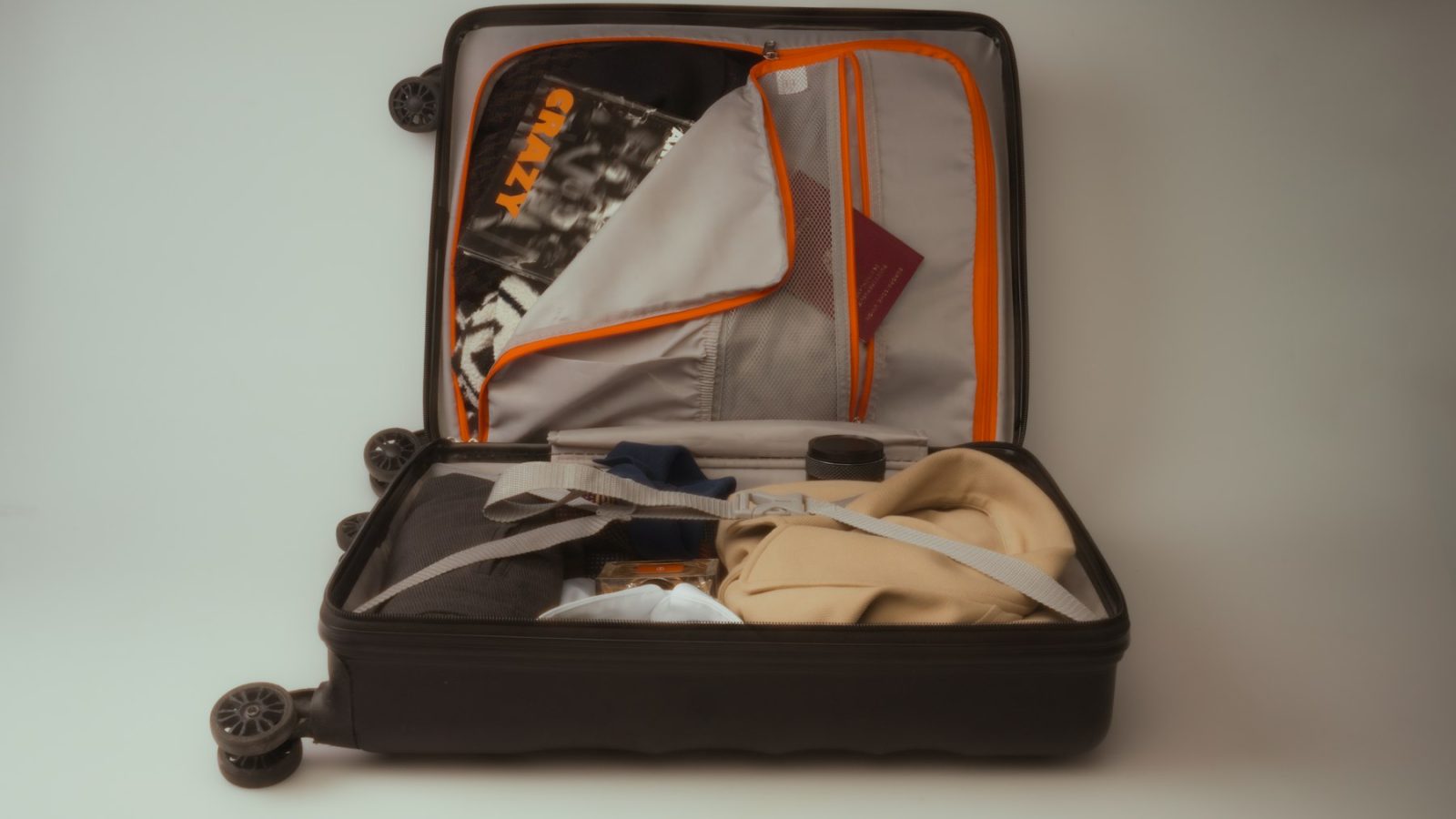
- Shoes and heavy items first, at the wheel end of a suitcase or the bottom of a backpack, so the bag stays balanced. Stuff socks inside shoes.
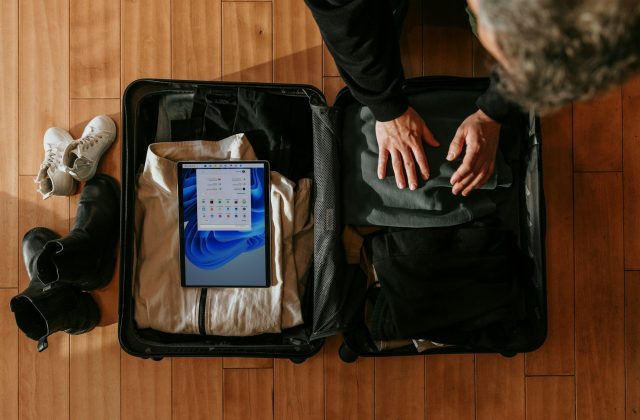
- Clothing in cubes or folded flat in the middle. Rolling works well for casual clothes; folding is better for shirts that crease.
- Gaps filled with underwear, belts and chargers.
- Toiletry bag and liquids on top or in an outside pocket, ready to remove at security.
- Documents, electronics and medication in your personal item, where you can reach them during the flight.
If you’re deciding whether cubes are worth it, see our packing cubes guide. They’re most useful for keeping clean and worn clothes separate and finding things fast without unpacking.
Step 5: Handle liquids correctly
For US airport security, TSA’s liquids rule allows containers of 3.4 ounces (100 ml) or less, all fitting in one quart-sized bag, per passenger. Medications and baby formula are exempt in reasonable quantities, but must be screened separately. See our guide to TSA rules. Other countries have similar rules, though some airports now use scanners that relax them. Check the rules for every airport you’ll pass through.
To save space, swap liquids for solids where you can (bar soap, solid shampoo, stick sunscreen) and decant only what you’ll use.
Why carry-on only is worth it
Checked bags cost money on many fares, and they do sometimes go astray. The US Department of Transportation publishes mishandled-bag rates by airline in its monthly Air Travel Consumer Report. If you do check a bag, DOT’s refund rule entitles you to a refund of the bag fee if it’s significantly delayed: not delivered within 12 hours of a domestic flight’s arrival, or 15–30 hours for international flights, depending on flight length (US DOT). File a mishandled-baggage report with the airline.
Step 6: Wear your bulkiest items
On travel day, wear your heaviest shoes, your jacket and your bulkiest layer. A jacket with pockets can hold your phone, passport and earbuds through security.
Step 7: Do a final edit
Lay everything out before it goes in the bag and remove anything you’re packing “just in case” for an unlikely scenario. If you’d be able to buy it at your destination easily and cheaply, it can usually stay home.
Carry-on packing checklist
- Passport or ID, boarding pass, payment cards
- Phone, charger, power bank and plug adapter
- Medication (in original packaging)
- Clear liquids bag
- Capsule wardrobe in cubes
- Sleepwear and underwear
- Light rain jacket or warm layer
- Reusable water bottle (empty through security)
- Earplugs or headphones for the flight
Want a list tailored to your trip? Try the packing list generator, or browse more lists in our packing hub. Still deciding between a wheeled carry-on and a backpack? Read travel backpack vs suitcase.
Choosing your bag
More carry-on guides
Travel rules, prices and product details change. Check official government, airline and manufacturer sources before you book or buy.