Quick answer
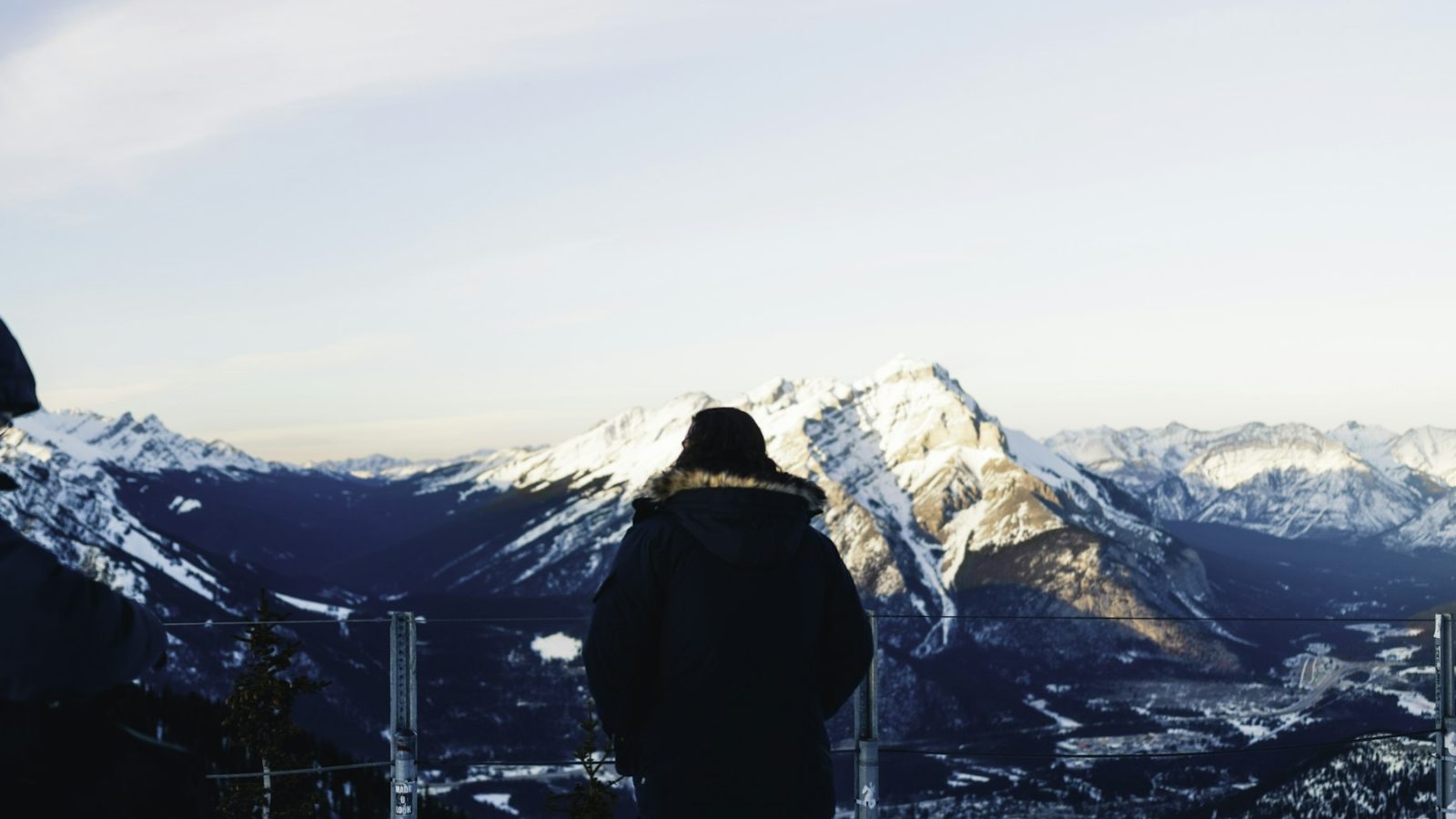
Banff in winter means three ski resorts (Banff Sunshine, Lake Louise and Mt Norquay), soaking in Banff Upper Hot Springs, skating and snowy town walks. Expect January averages around -8.5 °C. Snow tires or chains are mandatory on the Icefields Parkway from November 1 to March 31.
Winter weather
Environment Canada’s 1991–2020 normals for Banff put January’s average at -8.5 °C (average high -3.5 °C, low -13.5 °C) and December’s at -9.0 °C (Environment Canada). Cold snaps can be much colder.
Skiing and snowboarding
The 2026–27 season dates from SkiBig3:
| Resort | Season |
|---|---|
| Lake Louise Ski Resort | Nov 1, 2026 to May 2, 2027 |
| Mt Norquay | From Nov 6, 2026 (closing date: check the resort, as official pages differ) |
| Banff Sunshine Village | Nov 7, 2026 to May 24, 2027 |
Opening dates depend on snow conditions.
Banff Upper Hot Springs
Run by Parks Canada and open daily 10 am to 10 pm. Adult $19.75, senior or youth $17.25, family $64.25 (Parks Canada). It can close for maintenance, so check before you go.
Skating
Lake Louise is famous for winter skating. On natural ice, Parks Canada does not monitor thickness and recommends at least 15 cm of ice for skating alone and 20 cm for groups (Parks Canada skating). Stick to maintained rinks when you can.
Johnston Canyon in winter
Johnston Canyon is popular for winter ice walks, but the trail and day-use area are closed from October 13 to December 11, 2026 for construction (Parks Canada bulletin). Check the bulletin for updates and bring ice cleats when it reopens.
Avalanche safety
If you go beyond groomed trails or ski resort boundaries, every person in your group needs an avalanche transceiver, shovel and probe and the training to use them. Avalanche Canada recommends an Avalanche Skills Training 1 (AST 1) course to start. Check the daily avalanche forecast, and read Parks Canada’s avalanche guidance.
Winter driving
- Icefields Parkway: snow tires (M+S or mountain/snowflake) or chains are mandatory November 1 to March 31 (Parks Canada).
- Alberta highways: winter tires are recommended, not required by the province (Government of Alberta).
- Into BC (Yoho and beyond): winter tires or chains are required on most BC routes October 1 to April 30 (BC government).
What to pack
- Insulated jacket, base layers and warm mid-layers
- Insulated waterproof boots and ice cleats
- Toque, gloves or mitts, and a neck warmer
- Swimsuit for the hot springs
- Phone power bank (batteries drain fast in the cold)
More: what to pack for Canada.
More Canadian Rockies guides
Travel rules, prices and product details change. Check official government, airline and manufacturer sources before you book or buy.